CHILI GraFx for Shopper Marketing
The Creative Automation Platform
for Automated Shopper Marketing
The creative automation platform purpose-built for shopper marketing execution: enabling CPG brands and retailers to deliver data-driven, neuro-informed, localized POS materials at the speed and scale modern grocery demands.
The New Reality of Shopper Marketing in Grocery
Shopper marketing in grocery retail has fundamentally transformed. What was once a discipline of static endcaps and quarterly promotional calendars is now a dynamic, data-driven orchestration of digital and physical touchpoints designed to influence split-second decisions at the moment of purchase.
The modern grocery shopper journey is omnichannel by default.
Over 75% of shoppers now check promotions online or in-app before visiting stores. More than 40% use retailer apps to plan trips. Yet 80%+ of grocery purchases still close in-store, where unconscious, automatic decision-making dominates. Shoppers spend an average of 13 seconds per category, making most choices through learned patterns and visual cues rather than rational comparison.
This creates a unique production challenge.
Shopper marketing teams at CPG brands and retailers must deliver highly personalized, contextually relevant POS materials — shelf talkers, wobblers, endcap signage, digital screens, window clings, promotional bunkers—across thousands of products, hundreds of retailers, and constant promotional cycles. Each execution must be locally relevant (right products, right pricing, right retailer context) while remaining brand-perfect and data-accurate.
Traditional creative production cannot keep pace.
Agency workflows take weeks. Manual InDesign processes create bottlenecks. Localization requires armies of designers. Brand consistency erodes as local teams improvise. By the time materials reach stores, the promotional window has closed or the data has changed.
CHILI GraFx solves this.
Companies who love CHILI publish


What is CHILI GraFx for Shopper Marketing?
CHILI GraFx is the creative automation platform that enables CPG brands and retailers to execute shopper marketing at the speed, scale, and precision modern grocery demands. By combining governed design systems, real-time data integration, and self-service campaign portals, CHILI GraFx transforms shopper marketing from a production bottleneck into a strategic advantage.
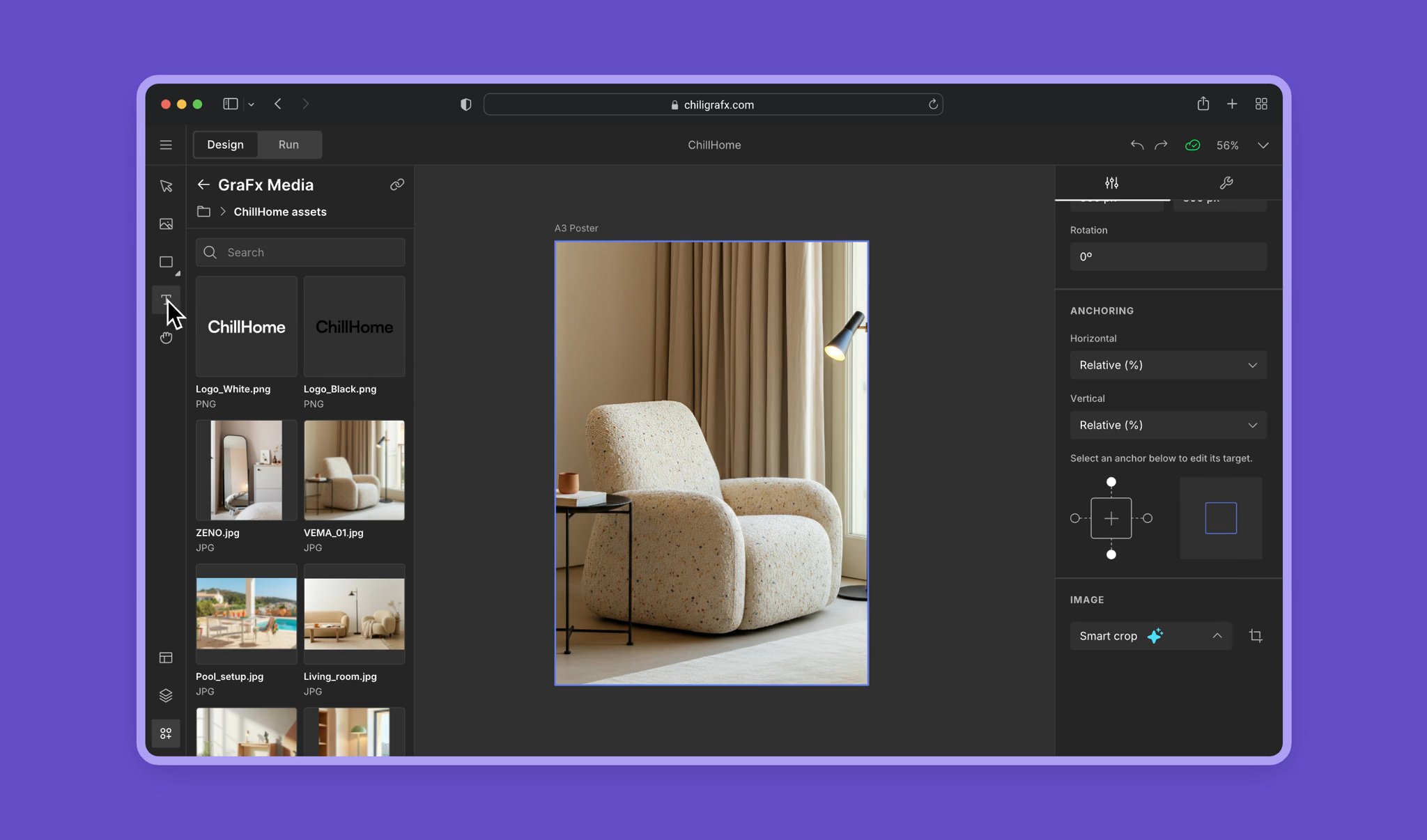
GraFx Studio
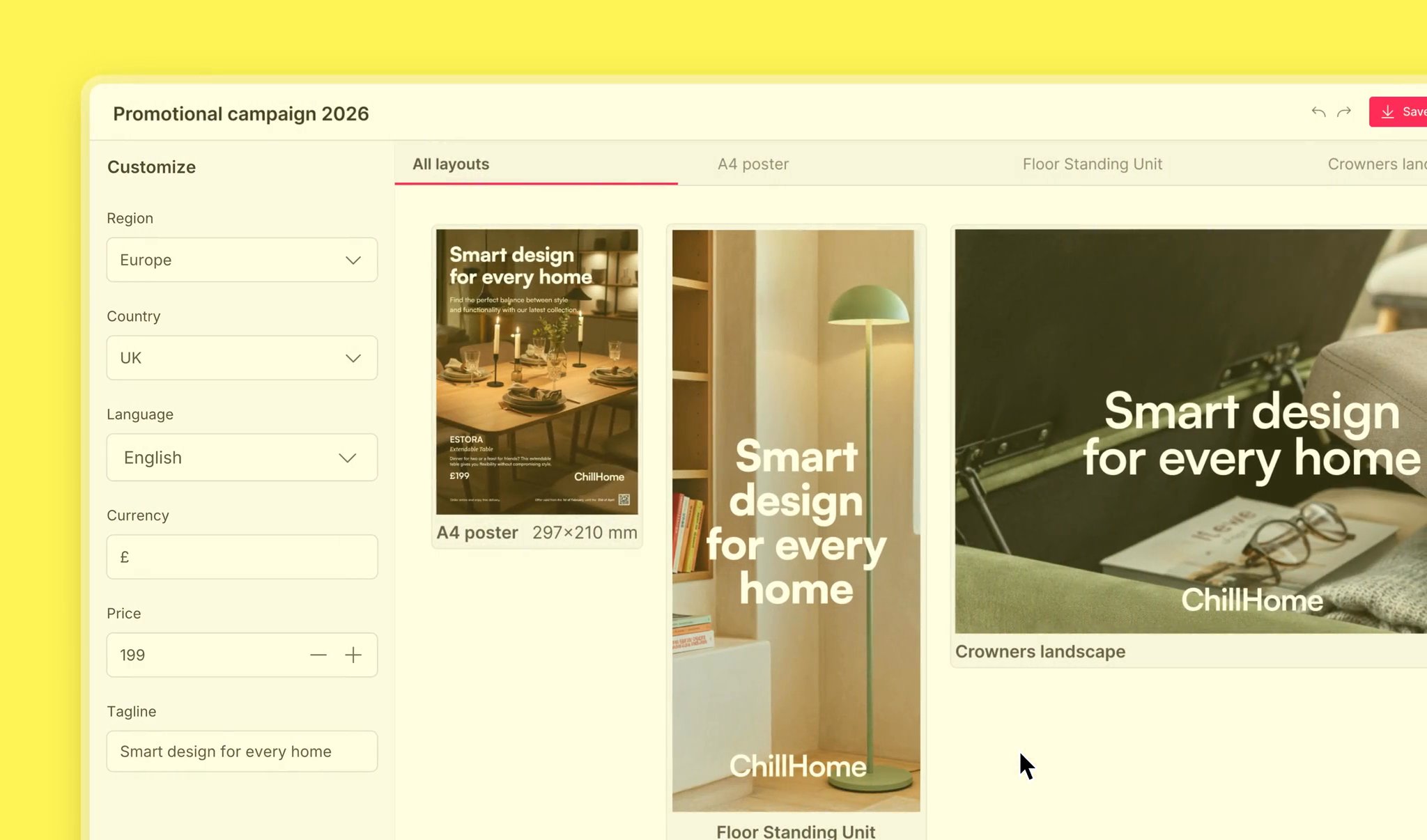
GraFx Experience
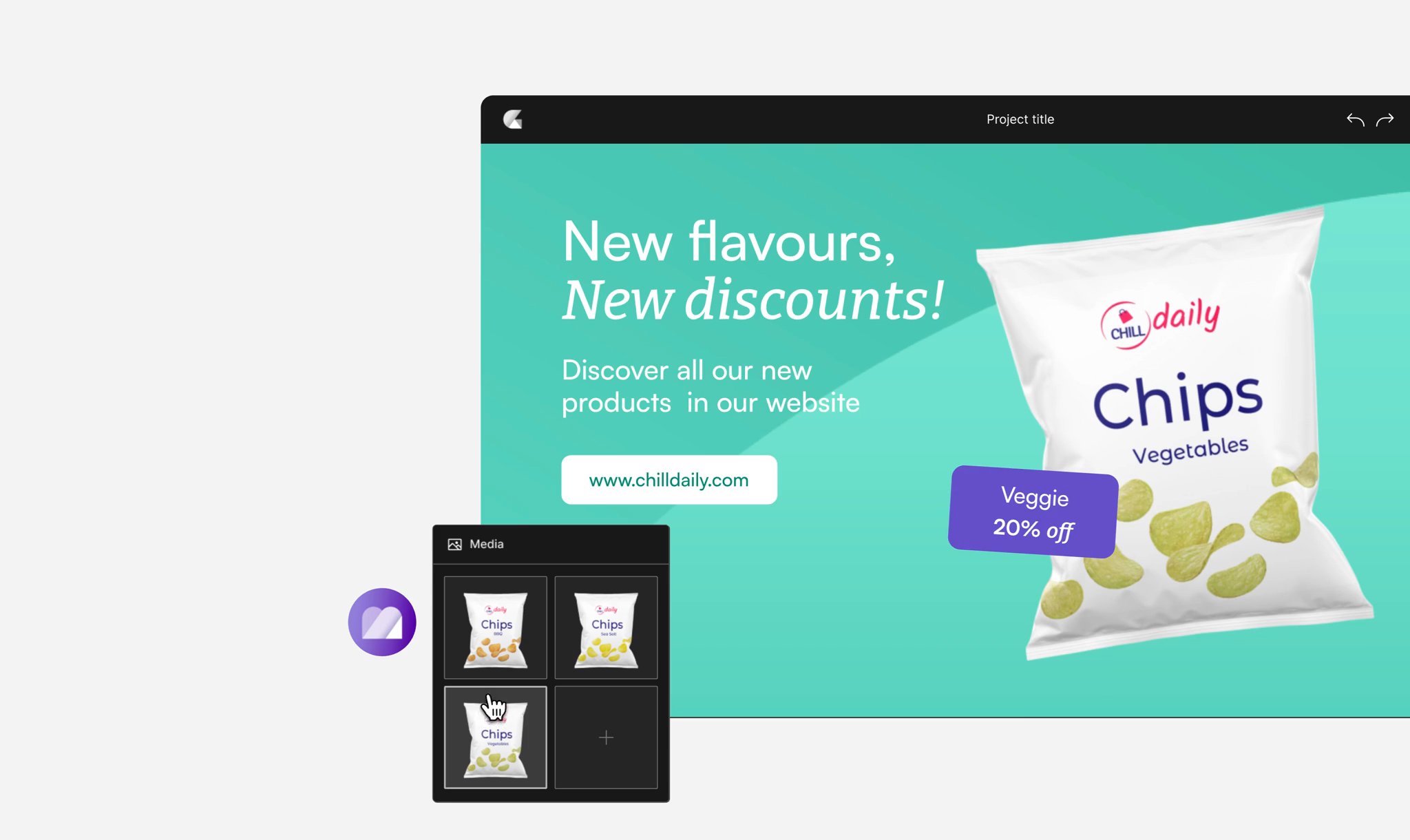
GraFx Media
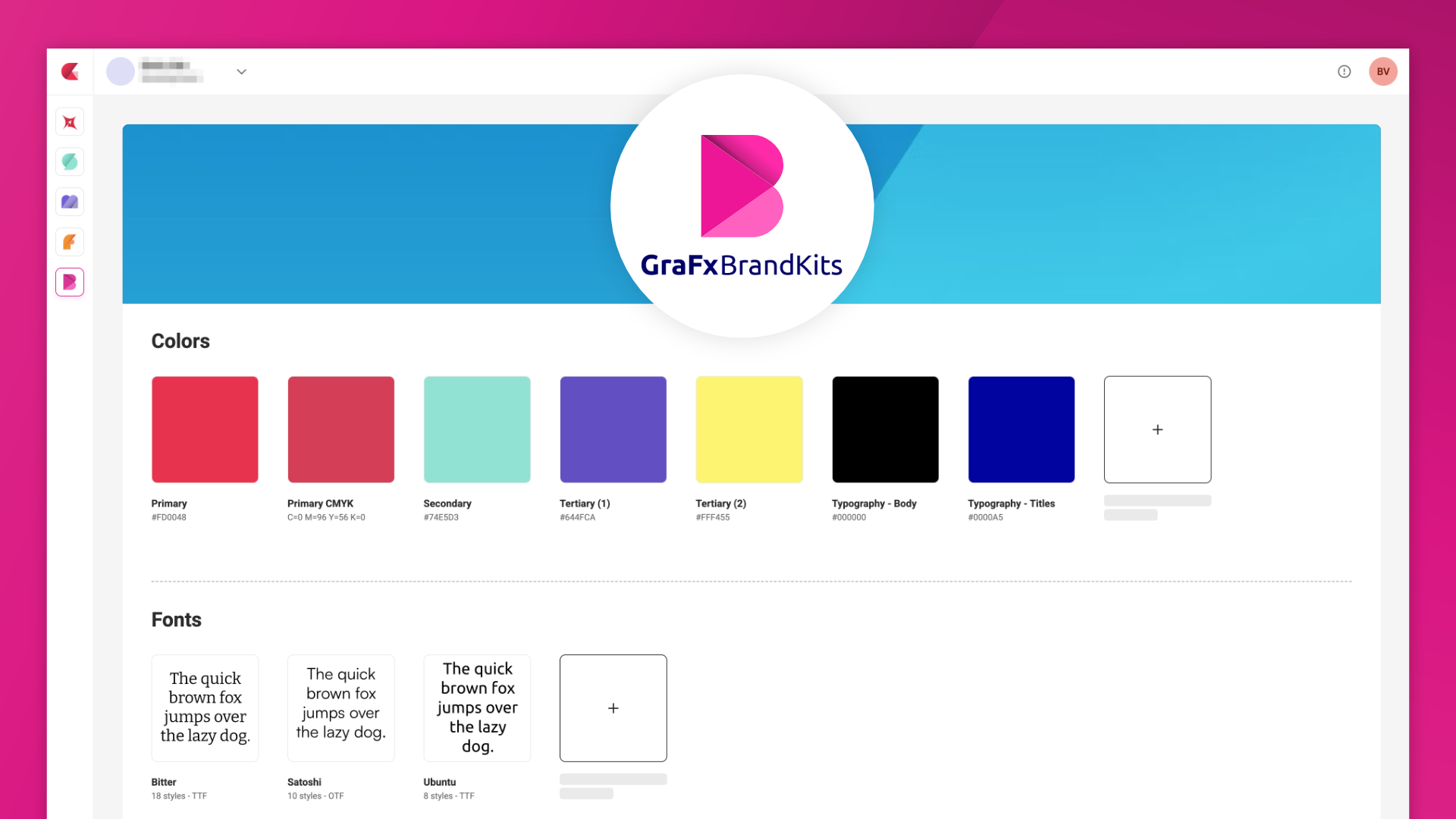
GraFx Fonts & GraFx Brand Kits
Connector Framework
Components

Why Shopper Marketing Needs Purpose-Built Creative Automation
Generic creative automation platforms were built for brand advertising — display banners, social media ads, email campaigns. Shopper marketing has fundamentally different requirements:
Retailer Complexity
A single CPG brand may execute shopper marketing across 50+ retail chains (Walmart, Kroger, Albertsons, Publix, Target, regional chains), each with unique:
- Co-branding requirements (retailer logos, colors, approved messaging)
- Promotional mechanics (BOGO, multi-buy, instant savings, loyalty points)
- Pricing structures (everyday pricing, promotional pricing, regional variations)
- Format specifications (material sizes, bleed requirements, color profiles)
- Approval processes (retailer marketing review, compliance checks)
GraFx Experience handles this through retailer-specific template configurations: One master creative design automatically adapts retailer branding, pricing formats, promotional mechanics, and output specifications based on which retailer portal the user selects.
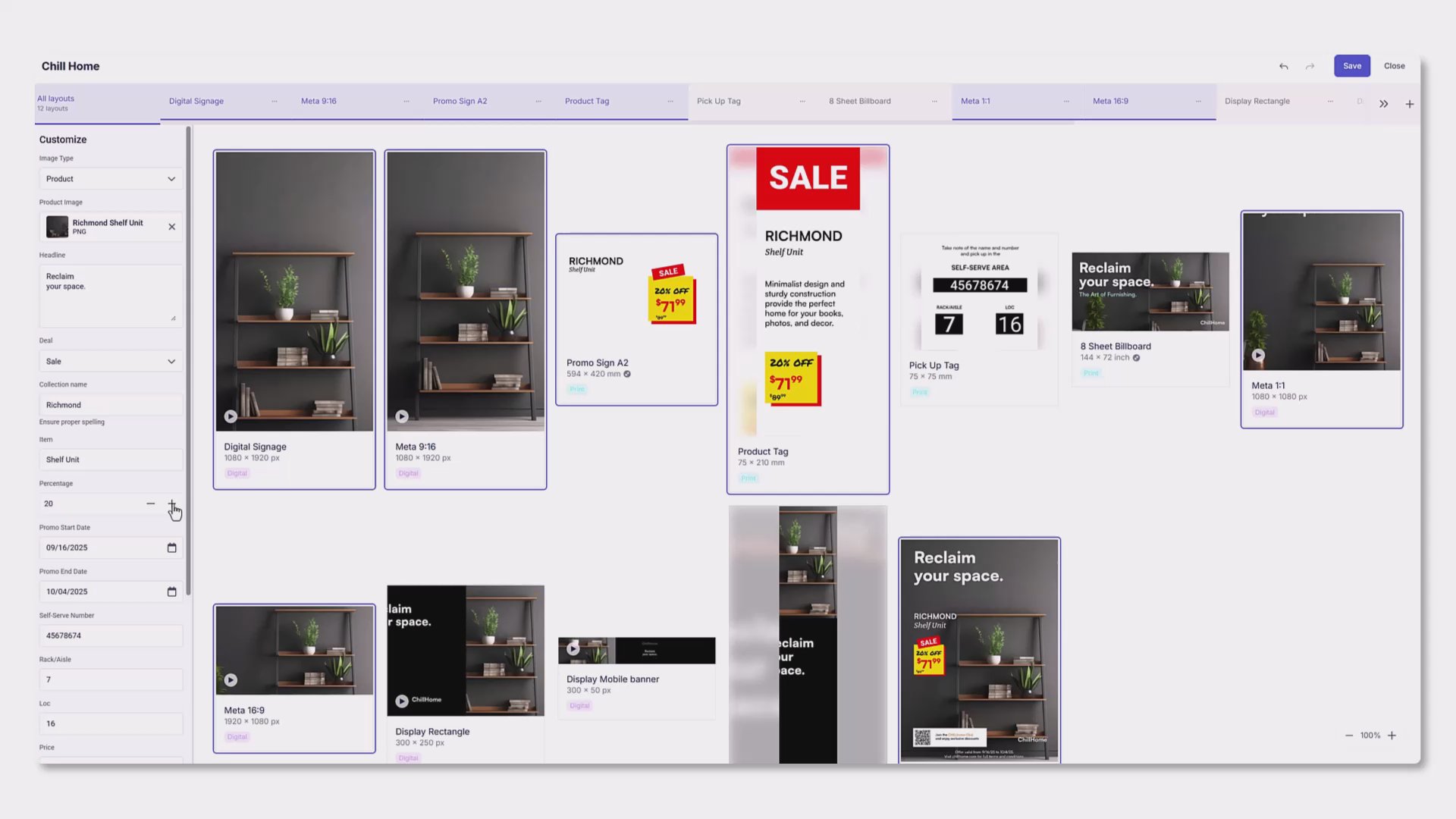
Product-Level Personalization at Scale
Unlike brand advertising (one message, broad distribution), shopper marketing operates at product-SKU granularity across thousands of executions:
- Different products featured at different retailers (based on distribution, velocity, promotional strategy)
- Product-specific claims and benefits (functional attributes, taste profiles, usage occasions)
- Pack-size variations (single serve, multi-pack, family size)
- Nutritional and compliance data unique to each SKU
- Product imagery requirements (package shots, lifestyle context, in-use demonstrations)
CHILI GraFx PIM integration + Components enable true product-level automation: Templates dynamically populate with accurate product data, imagery, nutritional facts, and compliance copy from your PIM system. Field teams select products from catalogs filtered by retailer distribution, and all product attributes auto-populate correctly.
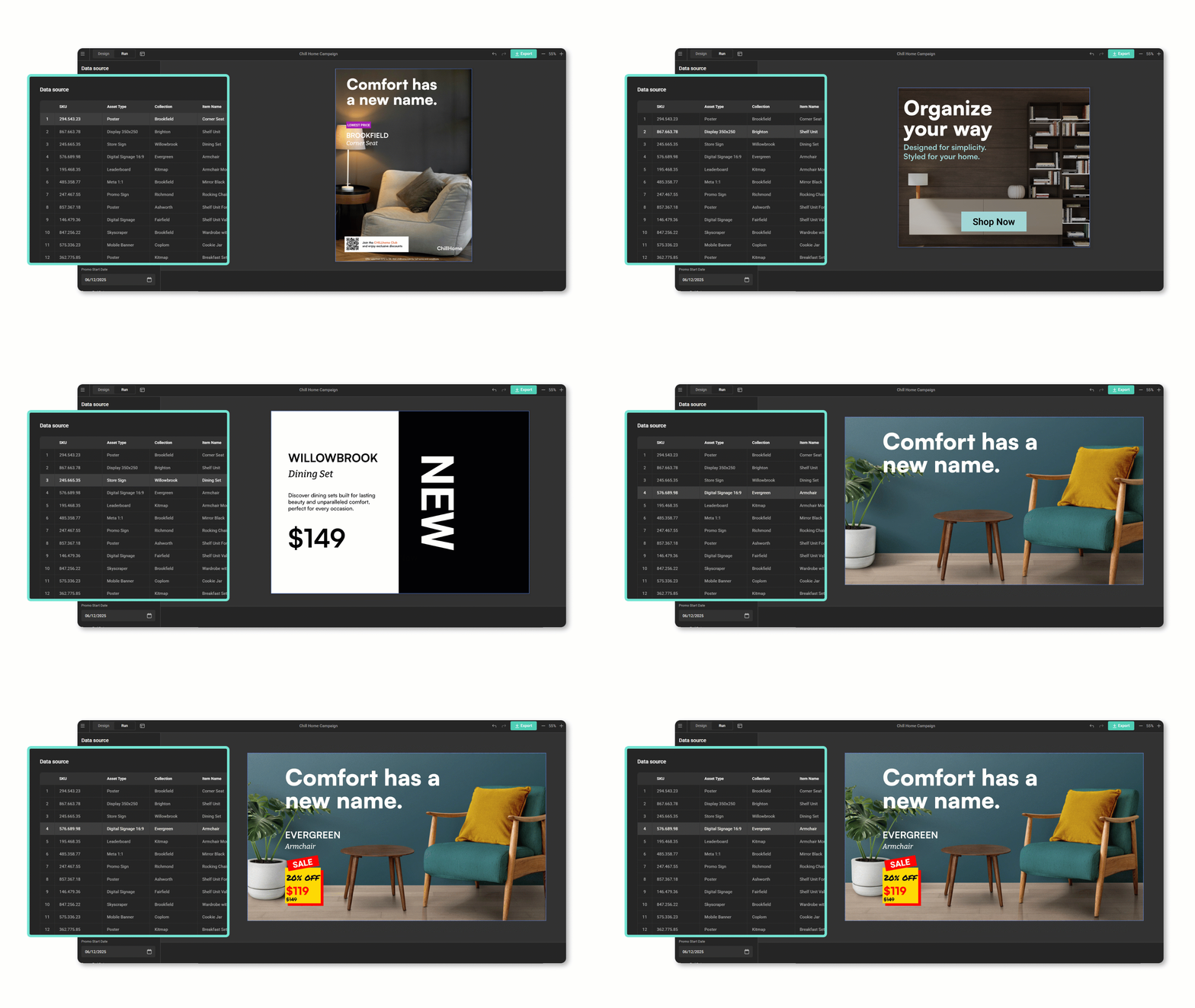
Speed-to-Store Imperative
Shopper marketing operates on compressed timelines driven by promotional calendars, competitive responses, and seasonal windows:
- Retailer promotional windows (often 1-2 weeks from approval to in-store)
- Reactive campaigns (competitor moves, inventory shifts, weather events)
- Test-and-learn cycles (measure, optimize, relaunch within single promotional period)
- New product launches (synchronized POS support across retail universe)
Traditional agency workflows (2-4 weeks) miss the window. GraFx Experience delivers campaign assets in hours: Local teams generate retailer-specific, product-specific POS materials on-demand. No designer queue. No back-and-forth revisions. Instant preview, instant approval, instant output.
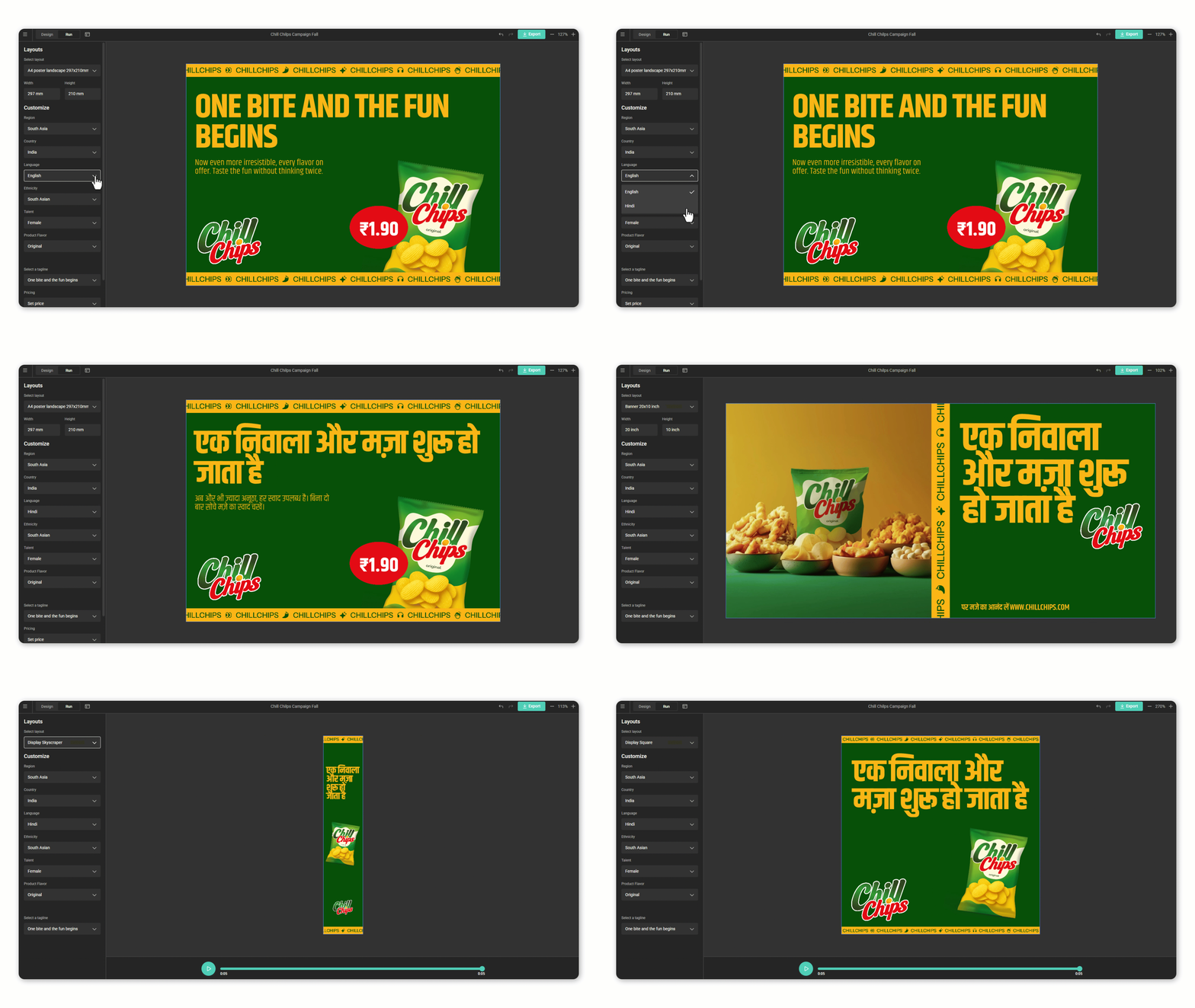
Field Team Enablement
CPG field organizations — brand ambassadors, retail execution teams, category managers, sales reps—are closest to the point of sale but typically furthest from creative resources. They see in-store opportunities (better shelf positioning, incremental display space, co-promotional tie-ins) but lack tools to capitalize quickly.
GraFx Experience empowers field teams with self-service creative tools: A field rep walking a Kroger store sees an opportunity for an incremental endcap display. Opens GraFx Experience on mobile device. Selects "Kroger Endcap Template." Chooses featured products from Kroger-distributed SKUs. Inputs promotional pricing from Kroger TPR calendar. Generates print-ready PDF. Emails to local print vendor. Endcap executes within 48 hours.

Neuro-Informed Creative Optimization
Neuroscience research shows that shopper decisions in grocery are dominated by fast, automatic System 1 processing driven by learned visual cues: color, shape, placement, simplicity. Effective shopper marketing materials must be optimized for:
- Visual salience — Standing out in cluttered in-store environments
- Cognitive ease — Communicating value propositions instantly without mental effort
- Emotional engagement — Triggering positive associations and approach motivation
- Cue clarity — Price, product, benefit presented in familiar, easily processed formats
CHILI GraFx enables systematic creative testing and optimization: Build multiple creative variations in GraFx Studio. Deploy A/B tests across matched store sets. Measure lift (sales velocity, basket penetration, category share). Identify winning creative elements. Update master templates with optimization learnings. Roll winning creative across retail universe — all without rebuilding templates from scratch.
The GraFx Experience Advantage: Campaign Portals That Scale Local Marketing
GraFx Experience represents a fundamental shift in how shopper marketing production works. Instead of creative teams as gatekeepers, GraFx Experience makes creative teams enablers, building systems that empower others to execute locally while maintaining brand control globally.
What is GraFx Experience?
GraFx Experience is a branded, self-service campaign portal that sits on top of your governed design system. Think of it as "your brand's marketing app" — customized to your brand identity, populated with your approved templates, connected to your data sources, and accessible to your distributed marketing organization.
For a CPG brand, GraFx Experience might serve:
- Field marketing teams generating retailer-specific POS
- Regional marketing managers customizing campaigns for local markets
- Agency partners producing executions for assigned retail accounts
- Sales teams creating presentation materials and sell-in decks
- Retail execution teams building in-store theater and displays
For a retailer, GraFx Experience might serve:
- Store managers customizing weekly promotional signage
- Category managers producing seasonal reset materials
- Private label brand teams creating product launch campaigns
- Regional merchandisers adapting national campaigns to local demographics
- Franchise owners executing brand-consistent local marketing
How It Works: The User Experience
1.Branded Portal Access
User logs into custom-branded portal (your logo, your colors, your naming). Dashboard shows templates organized by use case, retailer, season, or campaign. Permissions control which templates each user sees based on role, region, or retailer responsibility.
2.Template Selection
User selects template type (shelf talker, endcap poster, cooler cling, digital screen, etc.). Filters by retailer if managing multiple accounts. Template preview shows example execution with placeholder content.

3.Product Selection
Choose products from connected PIM catalog, pre-filtered to show only SKUs distributed at selected retailer. Product images, descriptions, nutritional data, and compliance copy auto-populate from PIM.
4.Localization & Customization
Input retailer-specific pricing (pulled from retailer promotional calendar or entered manually). Select promotional mechanics from approved options (BOGO, $X off, buy 2 get 1, instant savings, loyalty points). Add optional retailer co-branding elements (retailer logo, promotional badge). Customize messaging within approved copy parameters in any language.
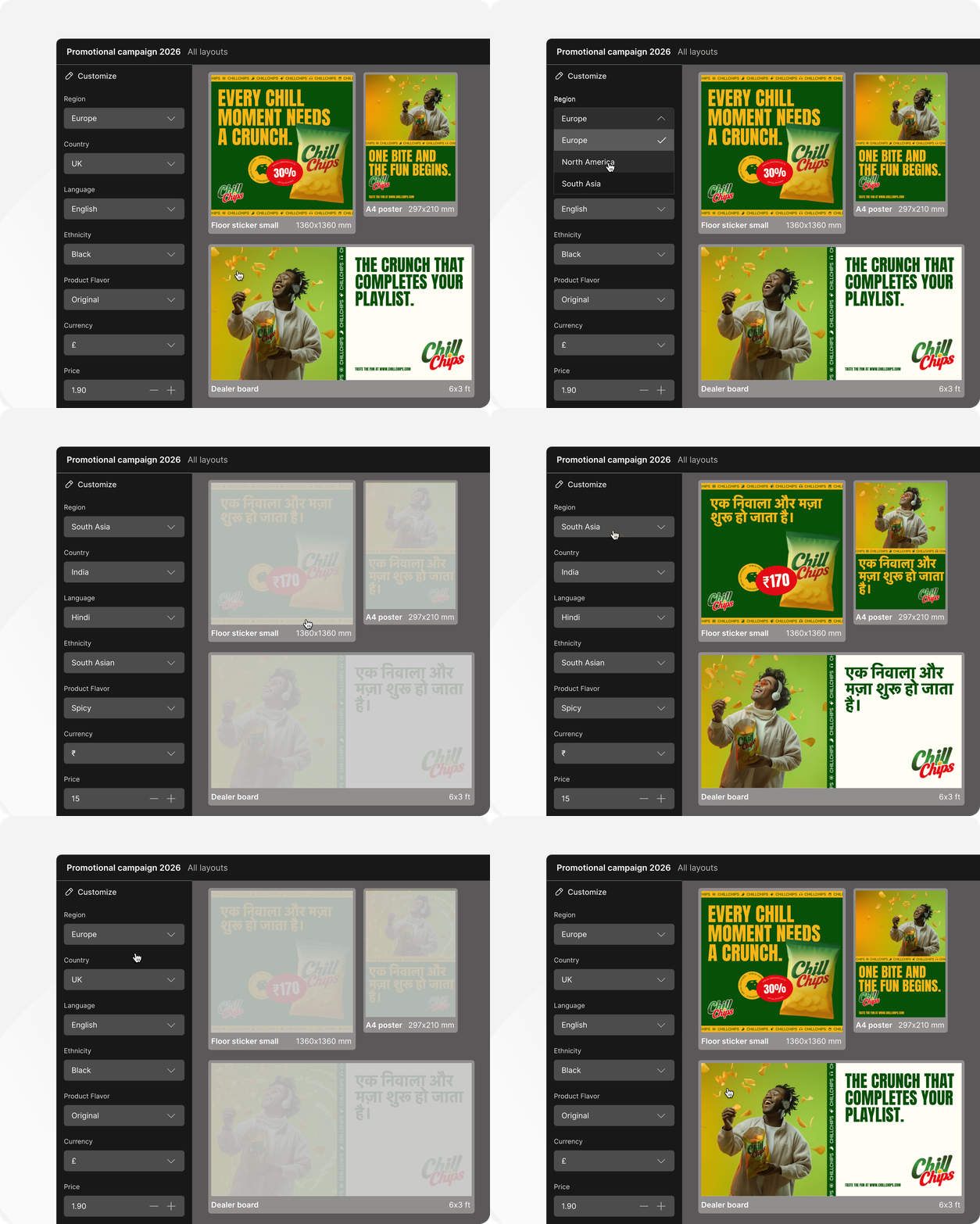
5.Real-Time Preview
See live preview of finished execution with actual products, actual pricing, actual retailer branding. Make adjustments. Preview updates instantly.
6.Output & Delivery
Generate print-ready PDF, web graphic, or digital signage file. Download immediately or route to approval workflow if governance requires. Send directly to print vendor, upload to retailer portal, or distribute to store execution teams.
Time from template selection to finished asset: 5-10 minutes.
Designer involvement required: Zero.
Brand compliance: 100%.

Three Critical Shopper Marketing Use Cases
Use Case 1: Retailer-Specific POS Production at Scale
The Challenge
A national CPG brand launches a Q2 promotional campaign featuring 12 SKUs across 8 retail chains (Walmart, Kroger, Albertsons, Publix, Target, Safeway, H-E-B, Wegmans). Each retailer requires:
- Unique co-branding (retailer logos, approved color schemes)
- Different promotional mechanics (Walmart: rollback pricing; Kroger: fuel points; Target: Circle rewards)
- Retailer-specific pricing (different TPR depths, regional pricing zones)
- Multiple POS formats per retailer (shelf signage, endcap posters, cooler clings, digital screens)
- Localized product mix (not all 12 SKUs distributed at every retailer)
Traditional approach: Agency produces 8 base creative executions (one per retailer). Requires 6+ rounds of retailer logo approvals. Local teams then request customizations for specific products/stores. Revision cycles add 2-3 weeks. Final cost: $45,000. Many stores never receive POS due to production delays.
How CHILI GraFx Solves It
Setup (One Time):
- Brand creative team builds master POS templates in GraFx Studio:
- Shelf talker template (4"×6", dynamic product + price + promotional badge)
- Endcap poster template (24"×36", hero product + supporting products grid + retailer co-brand zone)
- Cooler cling template (18"×24", single product feature + promotional call-out)
- Digital screen template (1920×1080, animated, 15-second loop)
Each template includes:
- Brand-locked elements: Logo placement, brand colors, typography, layout structure, compliance disclaimers
- Retailer variables: Co-brand logo slot, retailer-specific promotional badge library, retailer color accent options
- Product variables: Product image (from PIM), product name, product description, nutritional callouts, pack size
- Pricing variables: Base price, promotional price, discount percentage, promotional mechanic copy
- Component logic: If Kroger selected → show "Earn 2X fuel points" badge; If Walmart selected → show "Rollback" badge; If promotional price = base price → hide discount percentage
Execution (Ongoing):
- Field marketing manager for Kroger account logs into GraFx Experience:
- Selects "Q2 Promo Campaign - Kroger" template set
- Chooses 8 SKUs from product catalog (pre-filtered to Kroger distribution)
- Inputs Kroger promotional pricing from TPR calendar
- System auto-selects Kroger logo, fuel points badge, Kroger blue accent color
- Previews all POS formats (shelf, endcap, cooler, digital)
- Generates print-ready PDFs for all formats
- Emails PDFs to Kroger-approved print vendor
- Total time: 12 minutes
Repeat for remaining 7 retailers. Each takes 10-15 minutes.
Results
- Production time: 3 weeks → 2 hours
- Cost: $45,000 → $800 (print only; no agency fees)
- Retailer compliance: 100% (automated co-branding logic eliminates approval cycles)
- SKU accuracy: 100% (PIM integration eliminates manual data entry errors)
- Store coverage: 95%+ (speed enables full distribution before promotional window closes)

Use Case 2: Neuroscience-Optimized Creative Testing & Rollout
The Challenge
Shopper marketing teams know that creative execution matters — shelf signage that "pops" drives 15-30% incremental lift versus generic POS. But systematic creative testing is rare because traditional production makes iteration expensive and slow. Most brands lock creative at campaign planning (6-8 weeks pre-launch) and never optimize in-market.
Neuroscience research shows specific design principles drive shopper attention and conversion:
- High visual contrast increases noticeability in cluttered environments
- Simplified choice architecture reduces cognitive load and decision paralysis
- Price-anchoring effects (original price vs. promotional price presentation) influence perceived value
- Emotional imagery (consumption moments, social proof) triggers approach motivation
- Familiar brand cues (color, logo placement, tagline) activate learned preferences
But which combinations work best in your category, for your products, in your retailers? Testing requires producing multiple creative variations, deploying across matched store sets, measuring sales lift, and then rapidly scaling winners.
How CHILI GraFx Solves It
Phase 1: Build Creative Variations
Brand team creates 4 shelf talker variations in GraFx Studio testing specific hypotheses:
- Variation A (Control): Standard product shot + price + generic promotional badge
- Variation B (High Contrast): Bold color background + white price callout + oversized discount percentage
- Variation C (Emotional): Lifestyle usage image + product inset + occasion-based copy ("Perfect for summer BBQs")
- Variation D (Simplified): Minimal design + single benefit callout + stark price comparison (was/now)
All variations share:
- Same underlying template structure (maintained brand governance)
- Same product data connection (accurate SKU, pricing, compliance)
- Same output specifications (4"×6" print-ready PDF)
- Only creative treatment variables change
Phase 2: Deploy Matched Test
Launch 4-week test at Target stores:
- 200 stores per variation (800 total test stores)
- Store matching based on baseline sales velocity, demographics, store format
- All stores execute same promotional pricing (isolates creative variable)
- GraFx Experience enables field team to generate 800 unique executions (product + store + variation assignment) in single afternoon
- Variation assignment embedded in template metadata for post-test analysis
Phase 3: Measure & Analyze
Measure sales lift by variation:
- Variation A (Control): +8% lift vs. non-promoted baseline
- Variation B (High Contrast): +18% lift vs. baseline (125% lift vs. control)
- Variation C (Emotional): +12% lift vs. baseline (50% lift vs. control)
- Variation D (Simplified): +22% lift vs. baseline (175% lift vs. control)
Winner: Variation D (Simplified)
Neuroscience explanation: Category shoppers under time pressure rely on fast System 1 processing. Variation D minimized cognitive load (single benefit, clear price comparison) while maximizing visual salience (stark contrast, minimal distraction). Emotional imagery (Variation C) underperformed because category is functional not aspirational.
Phase 4: Rapid Rollout
Update master shelf talker template in GraFx Studio with Variation D creative treatment. All future executions inherit winning design. Roll winning creative across remaining retail universe (5,000+ stores) via GraFx Experience in 2 days.
Results
- Test execution time: 6 weeks (traditional) → 1 week (CHILI)
- Test cost: $80,000 (traditional) → $12,000 (CHILI)
- Rollout time: 4 weeks (traditional) → 2 days (CHILI)
- Incremental lift: +22% vs. baseline (vs. +8% with non-optimized creative)
- Annualized value: +$2.4M incremental revenue from creative optimization alone
Use Case 3: Real-Time Promotional Response & Competitive Blocking
The Challenge
Grocery shopper marketing operates in a dynamic competitive environment. Competitor promotional moves, unexpected inventory situations, weather-driven demand shifts, and retailer merchandising opportunities create constant need for rapid creative response.
Example scenarios:
- Competitive blocking: Competitor launches aggressive Memorial Day promotion on Tuesday; you need responsive POS in-store by Friday to protect share
- Inventory push: Distribution center overstocked on specific SKU; need to drive incremental velocity with immediate promotional support
- Weather event: Unexpected heat wave; opportunity to drive cooler placement and promotional signage for cold beverages
- Merchandising opportunity: Retailer offers incremental endcap space at key accounts; need product-specific POS within 24 hours to capture space
Traditional approach fails: Agency workflows (2+ weeks) miss the window. By the time creative is produced, the competitive threat has passed, the inventory has aged, the weather has changed, or the merchandising space has gone to a competitor.
How CHILI GraFx Solves It
Scenario: Competitive Blocking
Tuesday 9am: Retail intelligence team flags competitor launched "Buy 2 Get 1 Free" promotion on direct substitute product at Kroger and Albertsons, effective Wednesday, running through Memorial Day weekend.
Tuesday 10am: Shopper marketing director convenes rapid response team. Decision: Match competitive offer ("Buy 2 Get 1 Free") and add incremental POS support to protect share and visibility.
Tuesday 11am: Shopper marketing manager logs into GraFx Experience:
- Selects "Competitive Response - Shelf Talker" template (pre-approved for rapid deployment)
- Chooses threatened SKU from product catalog
- Inputs "Buy 2 Get 1 Free" promotional mechanic
- System auto-generates bold "MATCH IT" creative treatment (pre-designed for competitive parity scenarios)
- Generates retailer-specific versions for Kroger (includes fuel points messaging) and Albertsons (includes Just for U loyalty tie-in)
- Previews both versions
- Routes to VP Shopper Marketing for approval (compliance pre-validated by template logic)
- Total time: 18 minutes
Tuesday 2pm: VP approves via mobile. Shopper marketing manager sends print-ready PDFs to regional print vendors (pre-negotiated rush service agreements). Notifies field teams that POS will arrive Thursday.
Thursday morning: POS materials delivered to store execution teams. Field reps install shelf signage at priority Kroger and Albertsons locations.
Thursday afternoon: Competitive blocking POS live in-store, 48 hours after competitor launch.
Weekend results: Share protected. Velocity up 12% vs. prior weekend. Competitor promotion neutralized.
Results
- Response time: 2+ weeks (traditional) → 48 hours (CHILI)
- Approval cycles: 3-5 rounds (traditional) → 1 round (pre-approved template)
- Share protection: Maintained category share vs. 8-12 point expected loss
- Competitive advantage: First-mover disadvantage eliminated

Customer Story: The Coca-Cola Company
The Challenge: Global Scale Meets Local Relevance
The Coca-Cola Company operates the world's largest beverage brand portfolio across 200+ countries, 500+ brands, and partnerships with thousands of retail customers globally. Shopper marketing execution presents extraordinary complexity:
- Brand portfolio scale: Coca-Cola, Diet Coke, Coke Zero, Sprite, Fanta, Minute Maid, Powerade, Dasani, Smartwater, and 500+ regional/local brands
- Retailer diversity: From Walmart and Carrefour to independent convenience stores and food service
- Geographic localization: Country-specific regulations, languages, cultural preferences, packaging formats, and pricing structures
- Promotional velocity: Thousands of simultaneous campaigns across seasonal events, sporting sponsorships, retailer partnerships, and new product launches
- Field organization: Global, regional, and local marketing teams plus bottler partners executing at point of sale
Traditional production approach: Centralized global creative agencies produced master campaigns. Local markets requested adaptations. Revision cycles stretched weeks or months. By the time localized POS reached stores, promotional windows had closed or market conditions had shifted. Local teams, frustrated by delays, created unauthorized executions leading to brand inconsistency.
The Solution: GraFx Experience Campaign Portal
The Coca-Cola Company deployed CHILI GraFx with GraFx Experience as a global campaign portal enabling local marketing teams to execute shopper marketing with speed and brand consistency.
Platform Architecture:
GraFx Studio — Global brand creative teams build master campaign templates for each brand, seasonal event, and POS format:
- Cooler clings and door decals
- Shelf strips and shelf talkers
- Endcap posters and promotional bunkers
- Digital screen content and video loops
- Window clings and entrance signage
- Outdoor signage and menu boards (food service)
Templates include:
- Global brand locks: Coca-Cola logos, brand colors, typography, taglines, bottle/can imagery (from global DAM)
- Local variables: Language, pricing, promotional mechanics, retailer co-branding, pack sizes, product mix
- Component logic: Auto-populate product data, enforce compliance requirements, adapt layouts to content length variations (short vs. long language translations)
GraFx Experience Portal — Branded as Coca-Cola's internal campaign platform, accessible to:
- Local market marketing teams (country/region-level)
- Bottler partners (authorized brand execution)
- Retail execution agencies (field merchandising)
- Sales teams (retailer sell-in materials)
Connector Framework — Integration with:
- Global DAM (product imagery, brand assets, compliance-approved copy)
- PIM systems (SKU data, nutritional info, regulatory attributes by market)
- Retailer portals (co-branding assets, promotional calendars)
The Workflow
Global Campaign Launch: Coca-Cola launches "Share a Coke Summer" campaign globally.
Local Execution: Marketing manager in France logs into GraFx Experience:
- Selects "Share a Coke Summer" campaign templates
- Chooses POS formats needed (cooler clings, shelf talkers, digital screens)
- Selects products from French SKU catalog (Coca-Cola 33cl, 1L, 1.5L; Coke Zero 33cl)
- System auto-populates French language copy ("Partagez un Coca-Cola cet été")
- Inputs French retail pricing (€2.49 for promotional multi-pack)
- Selects retailer co-branding for Carrefour execution
- Previews all formats with actual French products, pricing, and Carrefour logo
- Generates print-ready files for local print vendor
- Total time: 15 minutes per retailer
Result: French market executes globally consistent campaign with complete local relevance (French language, French products, French pricing, French retailer branding) within hours of global launch.
Repeat across 50+ countries simultaneously.

Business Impact
Before CHILI GraFx:
- Campaign localization time: 4-8 weeks per market
- Brand consistency challenges: Unauthorized local executions
- Cost: High agency fees for every market adaptation
- Speed-to-market: Missed promotional windows
After CHILI GraFx:
- Campaign localization time: Hours (same day as global launch)
- Brand consistency: 100% (governed templates, global brand locks)
- Cost: 70% reduction in localization production costs
- Speed-to-market: In-market within days of global campaign launch
- Empowerment: Local teams enabled vs. bottlenecked
- Scale: Thousands of local executions managed through single platform
You just drop the images in, and the AI is smart enough to figure out what’s the point of interest and then positions it correctly in all layouts. That’s creative automation as both shield and sword, protecting the brand while enabling agile, on-the-ground execution.
The Data-Driven Shopper Marketing Advantage
Modern shopper marketing is fundamentally data-driven. Creative execution must connect to real-time data sources to deliver accuracy, personalization, and measurability.
Data Sources CHILI GraFx Connects
Product Information Management (PIM):
- SKU master data (product names, descriptions, attributes)
- Product imagery (pack shots, lifestyle photography)
- Nutritional information (calories, ingredients, allergens)
- Regulatory compliance data (claims substantiation, warning labels)
- Distribution data (which SKUs authorized at which retailers)
Retailer Data Feeds:
- Promotional calendars (TPR schedules, feature/display commitments)
- Pricing structures (everyday pricing, promotional pricing, zone pricing)
- Co-branding assets (retailer logos, promotional badges, loyalty program marks)
- Format specifications (POS material sizes, color profiles, placement guidelines)
- Planogram data (shelf positioning, facings, adjacencies)
Sales & Syndicated Data:
- Baseline sales velocity (pre-promotional benchmarks)
- Category performance (share, penetration, trips)
- Competitive intelligence (competitive pricing, promotional activity)
- Store-level performance (which stores/formats over-index)
Retail Media Platforms:
- Digital shelf screen specifications
- Programmatic ad buying integration
- Performance measurement (impressions, dwell time, attributed sales)
How Data Powers Execution
- Accuracy: PIM integration eliminates manual data entry errors. Product names, nutritional facts, pack sizes, and compliance copy auto-populate correctly every time.
- Personalization: Field teams select products based on retailer distribution, promotional calendar, and local strategy. Only authorized SKUs appear in template selection for each retailer.
- Compliance: Regulatory requirements (allergen warnings, nutritional claims substantiation, promotional disclaimers) auto-enforce based on product attributes and market regulations.
- Optimization: Sales performance data feeds back into template creation decisions. High-performing creative treatments become new template standards. Underperforming executions get retired.
- Measurement: Template metadata (SKU, retailer, promotional mechanic, creative variation) enables post-campaign analysis linking specific executions to measured sales lift.

Neuroscience-Informed Shopper Marketing Design
CHILI GraFx enables systematic application of neuroscience-informed design principles to shopper marketing execution.
Key Principles from Shopper Neuroscience Research
1.Visual Salience & Attention Capture
Research finding: Eye-tracking studies show shoppers scan shelves in F-patterns and Z-patterns, fixating on high-contrast elements, familiar brand cues, and price information. Average shelf dwell time: 3-5 seconds per brand block.
CHILI GraFx application — Templates optimized for:
- High-contrast color backgrounds (brand color vs. shelf environment)
- Strategic placement of attention-grabbing elements (price, discount percentage, brand logo) in F-pattern hot zones
- Size hierarchy that guides eye movement (largest = primary message; medium = secondary benefits; smallest = compliance)
2.Cognitive Load Minimization
Research finding: EEG studies demonstrate that shoppers in fast-paced grocery environments show elevated cognitive load when confronted with complex choice sets, unclear pricing structures, or unfamiliar promotional mechanics. High cognitive load correlates with choice deferral and category exits.
CHILI GraFx application — Templates designed for:
- Single, clear value proposition (not multiple competing messages)
- Simplified price communication (promotional price prominent; original price de-emphasized but present for anchoring)
- Familiar promotional mechanics ("Buy 2 Get 1" vs. complex tiered discounts)
- Minimal text (benefit-driven copy, not feature lists)
3.Emotional Engagement & Approach Motivation
Research finding: Neuroscience shows that emotional imagery (consumption moments, social contexts, sensory cues) activates reward pathways and approach motivation more effectively than product-only visuals. However, effectiveness varies by category (high for hedonic products; low for functional commodities).
CHILI GraFx application — Template libraries include:
- Lifestyle imagery options (consumption occasions, social proof, sensory appeal)
- Product-only options (functional categories where emotional appeals underperform)
- A/B testing frameworks to measure which creative approach drives lift in specific categories
4.Learned Brand Cues & Automatic Processing
Research finding: Familiar brand cues (color, logo, tagline, package shape) trigger automatic recognition and activate learned preferences with minimal conscious processing. Brand cues reduce perceived risk and simplify choice under time pressure.
CHILI GraFx application — Templates enforce:
- Consistent brand logo placement (top-left or top-center based on brand standards)
- Brand color dominance (background, accent elements, promotional badges)
- Tagline/slogan inclusion (reinforces brand positioning at point of decision)
- Package imagery prominence (triggers package recognition at shelf)

Multi-Format Shopper Marketing Execution
Shopper marketing operates across diverse physical and digital formats. CHILI GraFx masters enable consistent execution across all touchpoints.
In-Store Physical POS
Shelf-Level Materials:
- Shelf talkers (4"×6", 6"×8")
- Shelf strips (full shelf width, product category signage)
- Wobblers (die-cut, motion-attracting)
- Shelf blades (vertical signage extending into aisle)
- Price cards and promotional flags
Display & Merchandising:
- Endcap posters (18"×24", 24"×36", custom retailer sizes)
- Promotional bunker wraps (full-coverage graphics)
- Cooler/freezer clings (door decals, interior clings)
- Floor decals (high-traffic pathways, category entries)
- Dump bin toppers and side panels
Entrance & Perimeter:
- Window clings (seasonal campaigns, new product announcements)
- Entry floor graphics (promotional teasers)
- Checkout lane signage (impulse categories)
- Basket/cart signage (shopping mission reminders)

Digital In-Store Media
Digital Shelf Screens:
- Electronic shelf labels (ESL) with promotional overlays
- Shelf-mounted LCD screens (product demos, recipe ideas, promotional loops)
- Category signage screens (navigation + promotional content)
Digital Signage Networks:
- Endcap digital screens (hero product features, animated promotions)
- Aisle-end displays (navigational aids + retail media)
- Checkout screens (last-moment promotions, loyalty program messaging)
- Entrance screens (daily deals, seasonal features)
Interactive Kiosks:
- Recipe finders with product recommendations
- Nutritional information lookup
- Promotional offer dispensers (digital coupons)

CHILI GraFx Multi-Format Advantage
Single Design System → All Formats
Brand team creates master campaign design in GraFx Studio. Template logic automatically adapts to output format specifications:
- Print formats: CMYK color profile, 300dpi resolution, bleed allowances, crop marks
- Digital screen formats: RGB color profile, specific pixel dimensions (1920×1080, 1080×1920, etc.), video codec specifications
- Animation logic: Static elements become animated loops for digital formats (price pulsing, product rotation, benefit reveals)
- Aspect ratio intelligence: Layout reflows for 16:9 (horizontal screens) vs. 9:16 (vertical screens) vs. 4:3 (legacy displays)
Example: Single Campaign → 12 Format Outputs
"Summer BBQ" promotional campaign for chips brand:
GraFx Studio master template →
- Shelf talker (4"×6" print)
- Endcap poster (24"×36" print)
- Cooler cling (18"×24" print)
- Floor decal (36" diameter print)
- Digital shelf screen (1920×1080, 15-sec loop)
- Digital endcap screen (1080×1920 vertical, 20-sec loop)
- Checkout screen (1920×1080, 10-sec loop)
- Window cling (48"×72" print)
- Basket insert card (8.5"×11" print)
- Cart topper (24"×18" print)
- Aisle blade (12"×36" print)
- Promotional bunker wrap (custom die-line)
All 12 formats:
- Share master creative design (visual consistency)
- Pull same product data from PIM (accuracy)
- Apply same retailer co-branding (retailer compliance)
- Use same promotional pricing (message consistency)
- Generated simultaneously from single GraFx Experience session
Production time: 20 minutes (vs. 3+ weeks with traditional per-format production)

ROI & Business Impact for Shopper Marketing
Typical Results from CHILI GraFx Deployments
Production Efficiency:
- 80-90% reduction in execution time: 3-4 weeks → 2-3 days for full campaign rollout
- 70-85% reduction in production costs: Elimination of per-execution agency fees
- 95%+ reduction in revision cycles: Self-service eliminates back-and-forth between requesters and creative teams
Brand Consistency:
- 98%+ brand compliance: Governed templates prevent off-brand executions
- 100% data accuracy: PIM integration eliminates manual entry errors
- Zero unauthorized executions: Local teams use approved templates vs. creating rogue materials
Market Responsiveness:
- 10x faster competitive response: 2+ weeks → 48 hours for reactive campaigns
- Seasonal optimization: Launch holiday campaigns weeks earlier (capture full selling season)
- Test-and-learn velocity: Run 4-6 creative tests per year vs. 1-2 with traditional production
Business Impact:
- 5-15% incremental sales lift: From faster speed-to-market and creative optimization
- 10-20% reduction in total shopper marketing spend: Production efficiency + print consolidation
- 3-5x increase in execution volume: Same budget produces 3-5x more POS placements
- Payback period: 6-12 months typical


Sample ROI Model: Mid-Size CPG Brand
Baseline (Pre-CHILI GraFx):
- Annual shopper marketing budget: $2.5M
- Campaign volume: 12 major campaigns, 40 retailer-specific executions per campaign = 480 total executions
- Average production cost per execution: $3,500 (agency creative + production management)
- Average production time: 3 weeks per execution
- Brand compliance rate: 78% (22% unauthorized/off-brand local executions)
With CHILI GraFx:
- Platform investment: $120K annual (software + implementation)
- Campaign volume: 25 campaigns (increased due to production efficiency), 60 retailer executions per campaign = 1,500 total executions
- Average production cost per execution: $450 (print only; template-based production eliminates agency fees)
- Average production time: 2 days per execution
- Brand compliance rate: 99%
Financial Impact:
- Production cost savings: $3,500 → $450 per execution = $3,050 savings × 480 executions = $1.46M annual savings
- Incremental executions: 1,500 - 480 = 1,020 additional executions at $450 each = $459K incremental investment
- Net savings: $1.46M - $459K - $120K (platform) = $881K net annual savings
- Incremental sales lift: 1,020 additional POS placements × estimated $8K sales per placement = $8.2M incremental revenue
- ROI: 6,800% in Year 1

The integration with CHILI GraFx and the ongoing support made all the difference — enabling us to streamline production, leverage large data sets and lower our operational burden.

Thomas Julé
Airbus
CHILI GraFx Implementation: Getting Started
Phase 1: Pilot (8-12 Weeks)
Scope: Single brand or campaign, 2-3 retailer accounts, core POS formats (shelf talkers, endcaps, cooler clings)
Activities:
- Workshop: Map current shopper marketing workflows, identify pain points
- Template design: Convert 5-10 existing POS executions to GraFx Studio templates
- Data integration: Connect PIM (product data), DAM (imagery), retailer portal (co-branding)
- GraFx Experience setup: Configure campaign portal, define user roles
- User training: Field team enablement (2-hour workshop)
- Pilot execution: Generate 20-30 retailer-specific executions
- Measurement: Compare production time, cost, brand compliance vs. traditional process
Success Metrics:
- 70%+ time reduction
- 60%+ cost reduction
- 95%+ brand compliance
- User satisfaction (Net Promoter Score)
Deliverable: Business case for full rollout
Phase 2: Rollout (12-16 Weeks)
Scope: Full brand portfolio, all retail accounts, complete POS format library
Activities:
- Template library expansion: 30-50 templates covering all shopper marketing use cases
- Advanced integrations: Retailer promotional calendars, sales data feeds, retail media platforms
- GraFx Experience customization: Branded portal design, workflow automation, approval routing
- User onboarding: Training for 50-200 users (field teams, agencies, bottler partners)
- Process documentation: Playbooks, template usage guides, governance frameworks
- Change management: Stakeholder alignment, agency relationship evolution
Success Metrics:
- 90% user adoption
- 1,000+ executions generated via platform in first 90 days
- 80%+ production cost reduction
- Zero unauthorized off-brand executions
Deliverable: Fully operational shopper marketing production platform
Phase 3: Optimization (Ongoing)
Scope: Creative testing, performance measurement, continuous improvement
Activities:
- A/B creative testing: Deploy systematic tests of design variations
- Performance analytics: Link POS executions to sales lift measurement
- Template optimization: Update masters based on performance data
- Advanced automation: Predictive product recommendations, dynamic pricing integration
- Ecosystem expansion: New formats (digital shelf screens, AR experiences), new markets
Success Metrics:
- 10%+ sales lift from creative optimization
- 50%+ increase in test velocity
- Continuous cost-per-execution reduction

CHILI GraFx Technical Requirements
For Brand Teams (GraFx Studio Users)
- Web browser (Chrome, Firefox, Safari, Edge)
- Adobe Creative Cloud (for initial template design, optional)
- Design expertise (standard brand/agency skillset)
For Field Teams (GraFx Experience Users)
- Web browser or mobile device
- No design skills required
- Marketing domain knowledge (product positioning, promotional mechanics, retailer relationships)
Data Integrations
Product Information Management (PIM):
- Akeneo, Salsify, inRiver, Pimcore, SAP MDM, custom systems
- API connectivity for real-time product data
Digital Asset Management (DAM):
- Bynder, Widen, Acquia DAM, Canto, Adobe Experience Manager Assets
- GraFx Media (CHILI's native DAM)
Retailer Portals & Data:
- Custom API integrations per retailer
- Promotional calendar feeds
- Co-branding asset libraries
Sales & Syndicated Data:
- IRI, Nielsen, 84.51° (Kroger), retailer-specific data feeds
- Performance measurement integration
Security & Compliance
Data Security:
- SOC 2 Type II certified
- ISO 27001 compliant
- GDPR compliant
- Encrypted transmission (TLS 1.3)
- Encrypted storage (AES-256)
- Role-based access control
Brand Governance:
- Template lockdown controls (define what can/cannot be edited)
- Approval workflows (optional review before output)
- Audit trails (who created what, when)
- Version control (template change history)
Regulatory Compliance:
- Nutritional claims substantiation
- Allergen warning enforcement
- Promotional disclaimer requirements
- Market-specific regulatory rules (FDA, EU, country-level)
How is GraFx Experience different from a DAM or brand portal?
DAMs store assets. Brand portals distribute assets. GraFx Experience generates assets on-demand from governed templates. Users don't download pre-made files; they create customized, retailer-specific, product-specific POS materials in real-time.
Can field teams really use GraFx Experience without design training?
Yes. GraFx Experience is built for marketers, not designers. Users select products from catalogs, input pricing, choose from pre-approved options, and preview results. Brand guardrails ensure outputs stay on-brand regardless of user skill level.
What happens to our existing agency relationships when you implement CHILI GraFx?
Agencies evolve from execution to strategy. Instead of producing 500 retailer-specific shelf talkers, agencies design the master template system once. This frees agency resources for higher-value strategic work: campaign concepting, creative testing strategies, insights analysis.
How long does CHILI GraFx template creation take?
Simple POS template (shelf talker): 2-4 hours. Complex multi-format campaign system: 1-2 days. One-time investment enables thousands of executions.
Can CHILI GraFx integrate with our retail media platform?
Yes. CHILI generates digital screen content (MP4, HTML5) that can feed into retail media networks (Kroger Precision Marketing, Walmart Connect, etc.). API integrations enable programmatic creative generation for retail media buys.
Can CHILI GraFx handle print vendor management?
CHILI generates print-ready PDFs that can route to any print vendor. Many customers consolidate print through preferred vendors (negotiated rates, quality control). GraFx Experience can integrate with print procurement platforms for automated ordering.
How do we measure ROI from creative optimization?
Template metadata enables linking specific creative executions to sales performance. Deploy creative variation A to test stores, variation B to control stores, measure sales lift difference. CHILI enables systematic testing that traditional production makes impractical.
Can local teams override brand standards if needed?
Governance is flexible. Templates can include "breakaway" options for exceptional cases (e.g., retailer-mandated format deviations) with approval workflows. Most customers enforce 95% compliance with 5% exception handling for edge cases.
Next Steps
For CPG Brands
Challenges You Face:
- Shopper marketing execution too slow to capitalize on market opportunities
- Local teams frustrated by creative bottlenecks
- Brand consistency challenges across distributed field organization
- High agency costs for repetitive retailer-specific adaptations
- Inability to test and optimize creative systematically
Recommended Path:
- Discovery workshop (2 hours): Map your current shopper marketing production process, identify biggest pain points
- Custom demo (45 min): See GraFx Experience with your products, your retailers, your POS formats
- Pilot proposal: 90-day proof-of-concept with 1-2 brands, 3-5 retailers, core POS formats
- Rollout plan: Phased expansion based on pilot success
For Retailers
Challenges You Face:
- Weekly promotional production bottlenecks (leaflets, signage, digital screens)
- Store-level customization requests overwhelming central creative teams
- Private label marketing across 10-30+ store brands
- Need for speed (promotional windows measured in days, not weeks)
Recommended Path:
- Retail briefing (30 min): Understand your promotional calendar, production volumes, brand portfolio
- Standard demo (30 min): See grocery retail use cases (weekly leaflets, POS automation, private label)
- Pilot program: 60 days, 5-10 core templates, single market or brand
- Rapid rollout: 3-6 months to full operational deployment
About CHILI publish
CHILI publish is the creative automation company trusted by leading CPG brands and retailers to execute shopper marketing at scale. Founded in 2010, CHILI serves 500+ customers including The Coca-Cola Company, McDonald's, Subway, Carrefour, Colruyt Group, and Intermarché.
- Platform: CHILI GraFx (Cloud-based SaaS)
- Headquarters: Belgium
- Customers: 500+ global brands
- Specialization: Shopper marketing, retail execution, field marketing enablement