

Dear Canva: When AI Becomes the Problem

A frustrated marketer recently vented on LinkedIn. Her message was short, punchy, and clearly struck a nerve.
Dear Canva, Please stop chopping and changing and moving things around. You’re making my life frustrating and now design tasks are taking much too long because I’m looking for the ‘shapes’. Signed, Frustrated User Who Used to Love You.
The response was immediate. Designers, marketers, and educators piled on. A graphic design teacher pointed out that Canva's own tutorial videos are now out of date — she has to hunt for features alongside her students in class. Another commenter put it bluntly: “The AI features are invasive and unhelpful.” Even Canva's official reply — a link to a help article — only reinforced the point: this is a tool that has outgrown its users.
One commenter captured the irony perfectly: “It appears Canva has to learn to implement basic design principles for its own design product.”
This is what happens when you build for growth, not for users
Canva's trajectory is well documented. Born as a simple, accessible design tool for non-designers, it has been aggressively expanding into enterprise territory — adding feature upon feature, AI tool upon AI tool, in a race to justify a valuation and compete with Adobe. The result? A product that is increasingly difficult to use for the very people who made it popular.
This is a familiar pattern in SaaS. A tool finds product-market fit in simplicity. Growth pressure pushes it toward more features, more complexity, more pivots. The UI gets reorganised to accommodate the roadmap, not the user's workflow. And eventually, the people who loved it most feel abandoned.
For individual creatives and small teams, this is frustrating. For enterprise brands — where consistency, governance, and production scale are non-negotiable — it's a much bigger problem.
Canva is not an enterprise-grade solution
CHILI publish works with some of the world's most demanding brand organisations: Carrefour, Colruyt Group, Intermarché, Coca-Cola, Subway. These are companies with hundreds of stores, thousands of SKUs, and brand standards that cannot be compromised.
For them, a tool that arbitrarily moves features around, pushes unvalidated AI into live workflows, and charges per user is not a serious option.
Let's be direct about the commercial reality too. Canva's enterprise pricing is built on a per-user model. For large organisations — with field teams, regional marketers, retail partners, extensive agency teams, and franchise operators all needing access — that model becomes expensive, fast. And what do you get for that cost? A consumer-grade tool retrofitted for enterprise use, without the deep brand control, governance, or automation infrastructure that enterprise content production actually requires.
CHILI GraFx is priced differently — and deliberately so. Every package includes unlimited end-users. You pay for output (renders), not for headcount. That means you can roll out self-service design capabilities across your entire organisation — stores, field teams, agencies, partners — without the cost ballooning with every new user you onboard. For more information, check out the full CHILI GraFx pricing model.
On AI: we believe in use cases, not features
The Canva thread is also a story about AI gone wrong. Not wrong in a dramatic sense — but wrong in the way that matters most to working professionals: AI that adds friction instead of removing it. Features that interrupt familiar workflows. Tools that demand attention rather than earn it.
At CHILI publish, our product team takes a deliberately different approach. Every AI capability we ship has a clear use case and a direct, measurable value for the people using it. We do not ship AI for AI's sake.

We’re deliberate about how and when we ship AI capabilities. Every feature we release has a clear use case and direct value for our users. If it’s still experimental, it lives in GraFx Labs — so teams can explore it without any risk to their production workflows. AI for AI’s sake helps nobody.
Ward De Langhe
Chief Product Officer - CHILI publish
That last part matters. When we want to push the boundaries of what AI-powered creative automation can do, we don't push it into production environments uninvited. We built GraFx Labs for exactly this reason: a dedicated space inside CHILI GraFx where Template Designers and Environment Admins can explore and validate experimental AI capabilities — completely separate from live workflows.
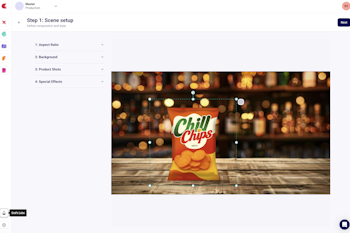
The first GraFx Labs release includes two AI experiments built on GraFx Genie: a Product Image Creator and a Product Image Composer, both designed to help product and marketing teams generate high-quality product visuals at speed. They're clearly marked as experimental. They can be used freely without touching a single production template. And feedback from those experiments directly shapes what gets built next.

This is what responsible AI rollout looks like in practice.
Stability is not a feature — it's the foundation
The Canva thread resonated with so many people because it named something real: the hidden cost of instability. Every time a tool moves something, reorganises a menu, or replaces a familiar workflow with something new, users pay a tax — in time, in frustration, in lost confidence.
For enterprise brands running high-volume, time-critical production across dozens of markets, that tax is not acceptable. Your design operations cannot be held hostage to someone else's product roadmap decisions.
CHILI GraFx is built with this in mind. Our Design Systems give brands a stable, governed foundation for all content production — templates, rules, brand logic — that doesn't shift under your feet when we ship new capabilities. When AI features arrive, they extend what your teams can do. They don't disrupt what they already know.
A different kind of relationship
Heather Pollock ended her post with something worth sitting with: she said she was a bit sad — that she'd been a Canva fan since the beginning, and now she's at her wit's end. That's not just churn risk. That's a broken relationship between a product and the people who believed in it.
Enterprise brands cannot afford that kind of relationship with their creative infrastructure. The stakes are too high — brand reputation, campaign velocity, regulatory compliance, team productivity — for the tools to be an unpredictable variable.
If your organisation has outgrown the tools that once served you well, we'd like to show you what a different kind of platform looks like.
Check out this recent online session State of Platform: Controlled Creative Freedom & GraFx Labs. See GraFx Labs in action and find out how CHILI GraFx is shipping AI the right way — with clear use cases, brand control, and zero disruption to your production workflows.
Or request a personalized demo to see how enterprise brands are automating creative production at scale, without sacrificing brand control.
Marketing

Kees Henniphof
Mar 17, 2026
Sign up for blog updates
Related articles
Product,
Marketing

Bram Verniest
Feb 25, 2026

Partners

Umesh Kumar Gope
Jan 21, 2026

